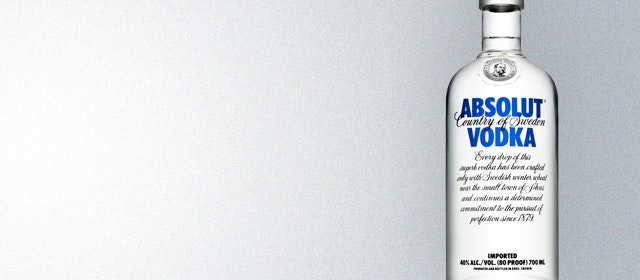

Absolut Citron was launched in 1988, and it changed everything in ways that nobody fully intended. The vodka was good — genuinely good, made with natural lemon and lime, free of the artificial character that would come to define the category's worst excesses. But the commercial success it generated created an incentive structure that has spent the subsequent four decades producing things considerably less edifying: vodkas flavoured with birthday cake, with cotton candy, with whipped cream, with "electricity." The category became, for a significant period, a monument to the proposition that novelty is more commercially durable than quality.
The rehabilitation of flavoured vodka — which is genuinely underway — requires distinguishing clearly between the approaches. There are, broadly, three.
Natural Maceration: The Right Method
The finest flavoured vodkas are produced by macerating the flavouring ingredient directly in the base spirit, then redistilling or — more commonly — simply allowing the maceration to complete and adjusting the proof. The key word is "natural": the botanical or fruit used must be the actual thing, not a synthetic approximation designed in a laboratory.
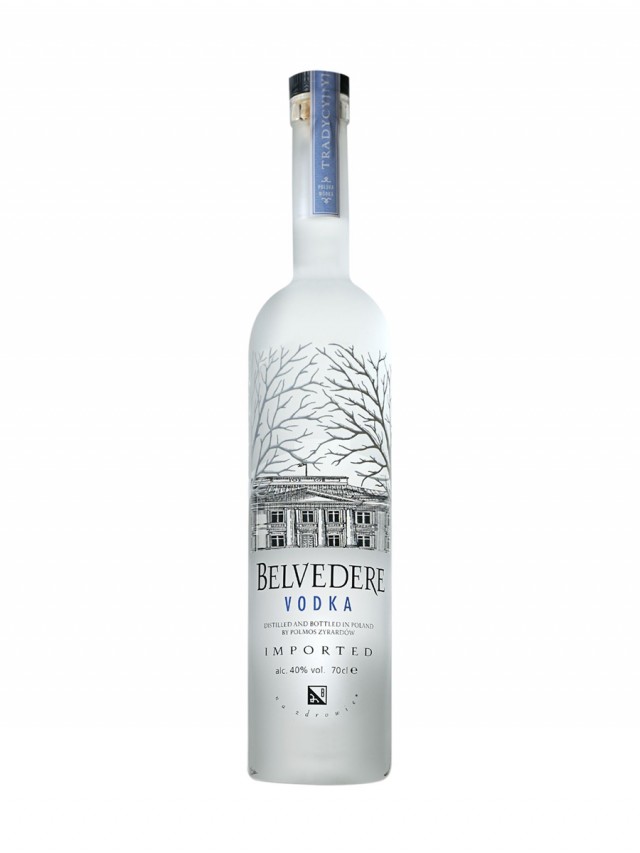
Belvedere Pink Grapefruit is the clearest contemporary example of this done correctly. Pink grapefruit peel and flesh are macerated in Belvedere's rye base; the resulting spirit has genuine citrus complexity — bitter pith, floral top notes, the specific astringency of pink grapefruit that distinguishes it from yellow — over the rye's spice and vanilla. It is not trying to smell like a fruit-flavoured confection. It smells like a fruit-flavoured vodka, which is a different and more interesting thing.
Botanical Integration: The Żubrówka Model
Żubrówka bison grass vodka represents a different tradition — one in which the flavouring agent is not a post-production addition but an integral part of the production process. Bison grass harvested from the Białowieża Forest is infused into the spirit at the distillery, with a single blade placed in each bottle. The result — vanilla, coumarin, fresh-cut hay, subtle spice — is so thoroughly integrated with the vodka character that it is more accurate to describe it as a flavoured spirit than a flavoured vodka in the contemporary marketing sense.
This model — in which the botanical is part of the spirit's identity rather than an added feature — represents the category's highest form.
Synthetic Flavouring: The Category's Persistent Problem
The third approach — synthetic flavour compounds added to neutral spirit, typically with significant added sugar — accounts for the majority of the flavoured vodka market by volume. These products are not pretending to be anything other than flavoured alcohol. They serve a specific consumer need (sweetness, novelty, low price point) and they meet that need effectively. But they are not craft products, they do not reward attention, and they should not be evaluated on the same terms as naturally produced expressions.
The practical test for any flavoured vodka is simple: does it smell and taste like the named ingredient, or like a synthetic approximation of it? Fresh pink grapefruit has bitterness and complexity. Fresh vanilla has warmth and depth. If your flavoured vodka tastes like the concept of a fruit rather than the fruit itself, you are in synthetic territory.
The craft innovation in this category is real. The marketing gimmickry is equally real and considerably more prevalent. The two coexist, and the obligation is on the drinker to tell them apart.