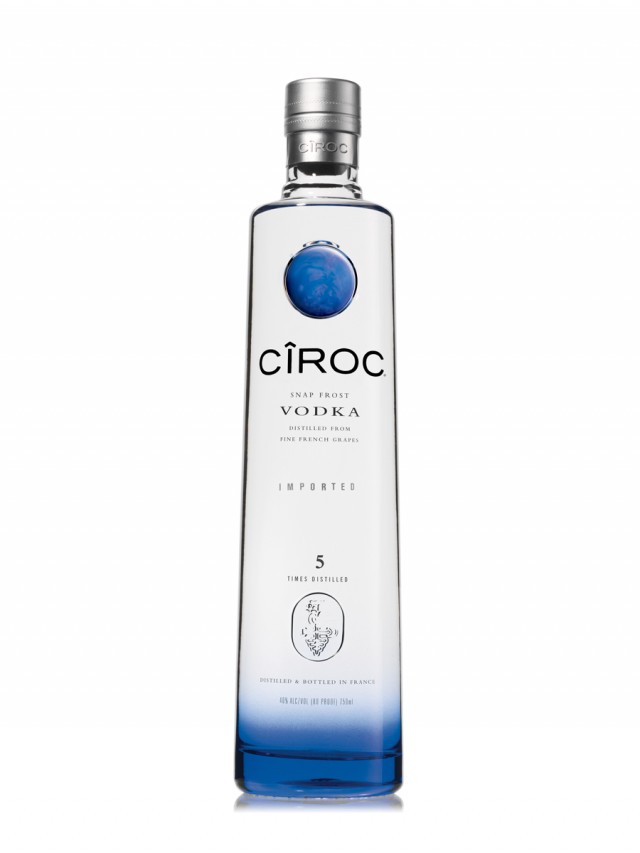

The road from Cahors to Condom passes through a landscape that has been producing wine for longer than France has been France. The vines here have a particular character — the limestone soils of Gascony, the continental temperatures, the memory of centuries in the terroir. Somewhere in this landscape, the decision was made that the same grapes producing Armagnac and Côtes du Marmandais could produce vodka. The result was Cîroc, and it changed the category permanently.
Jean-Sébastien Robicquet, who created the original Cîroc concept in 2003, was working from a simple and elegant premise: if French wine grapes could produce the world's greatest brandy, they could produce something extraordinary when distilled to vodka proof. The premise was correct.
Why Grapes Produce a Different Vodka
The fermentation chemistry of wine grapes differs from cereal grain in ways that persist through distillation. Grape must contains not only fermentable sugars but also aromatic compounds — esters, terpenes, and higher alcohols — that derive from the grape variety, the terroir, and the fermentation conditions. Ugni Blanc, the primary grape in Cîroc's blend (alongside Mauzac Blanc), is the same variety used in Cognac production: neutral enough for brandy base wine, but possessed of a delicate floral and citrus character that survives careful distillation.
Five distillations in copper pot stills progressively concentrate and clarify this character. The finished spirit carries fresh grape, citrus blossom, and a lightness that grain vodkas — even the finest wheat expressions — cannot replicate. The body is thinner than potato vodka, lighter than rye, and the overall effect is closer to a very clean eau-de-vie than to the grain-based neutrality that defines the vodka mainstream.
The New Wave of Grape Vodka
Cîroc's commercial success — accelerated dramatically by Sean Combs's involvement from 2007 onwards — created the market space for other producers to explore grape as a vodka base. The results have been uneven but occasionally extraordinary:
Idol Blue — produced from Colombard grapes in Gascony, brings a rounder, slightly richer profile than Cîroc. The Colombard variety adds more body and a hint of tropical fruit that distinguishes it clearly from its more famous neighbour.
Armand de Brignac Blanc de Blancs Vodka — yes, the Champagne house — uses Chardonnay from the Champagne appellation as its base. The mineral precision of Champagne terroir produces a vodka of extraordinary delicacy, though at a price point that makes it more of a collector's item than a daily drink.
Crûg Farm Vodka and several other small producers in Burgundy and the Loire have begun producing single-varietal grape vodkas that carry genuine vineyard provenance — the vodka equivalent of single-estate whisky, with named plots and harvest years.
The Terroir Question
Whether grape vodka constitutes a genuine terroir expression or a well-made approximation of one is a question I have spent considerable time with. My conclusion, reached after tasting Cîroc against Idol Blue and two smaller-production Gascon expressions, is that the grape variety matters more than the specific origin — at least at vodka distillation strength. Ugni Blanc and Colombard are distinguishable from each other in the finished spirit. Whether Ugni Blanc from one Gascon commune is distinguishable from Ugni Blanc from a neighbouring commune at the same distillation proof is a harder case to make convincingly.
This does not diminish the category. It simply locates the terroir expression at the level of grape variety and regional tradition rather than individual vineyard. France's contribution to the vodka world is real, distinctive, and worth considerably more attention than most drinkers have given it.