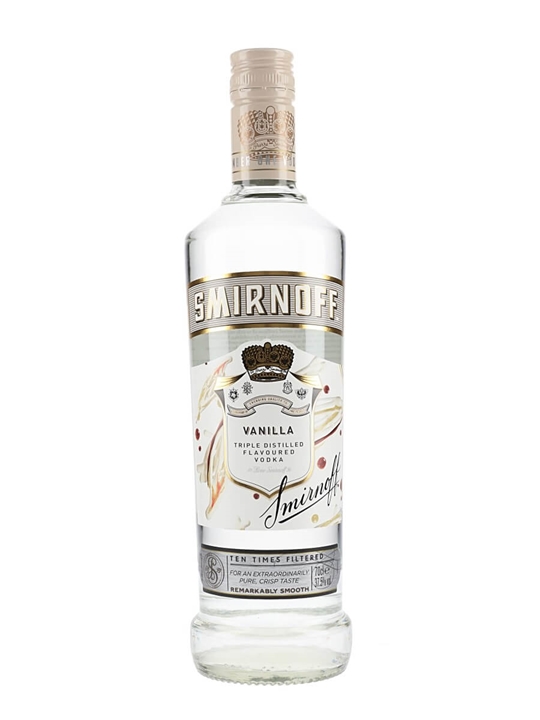

Smirnoff is the world's best-selling premium vodka — a statement that invites both respect and scepticism. The brand's origins are genuinely Russian, founded by Pyotr Smirnov in Moscow in 1864, but the vodka sold today is produced in Plainfield, Illinois, by Diageo. The recipe may be Russian; the execution is American industrial efficiency at scale.
The production process is the source of Smirnoff's consistency: triple distillation followed by ten stages of filtration through seven columns of charcoal. The result is a spirit stripped of almost everything except smoothness, which is either the point or the problem, depending on your perspective. At 40% ABV, it is as neutral as mainstream vodka gets.
The nose is light and clean: fine grain spice, a sweep of citrus zest — lemon and lime — and light touches of mint. The palate is smooth and crisp, with subtle vanilla, a hint of pepper, and a creamy texture that belies the modest price. There is a lemon-pepper character that runs through the spirit from nose to finish.
The finish is light and clean, with a faint bite of alcohol and a whisper of pepper. Smirnoff No. 21 is not a vodka for contemplation — it is a vodka for mixing, for parties, for the kind of evening where nobody is taking notes. It does that job better than almost any other spirit at its price, which is why it sells hundreds of millions of bottles every year.